Structural Engineering Blog

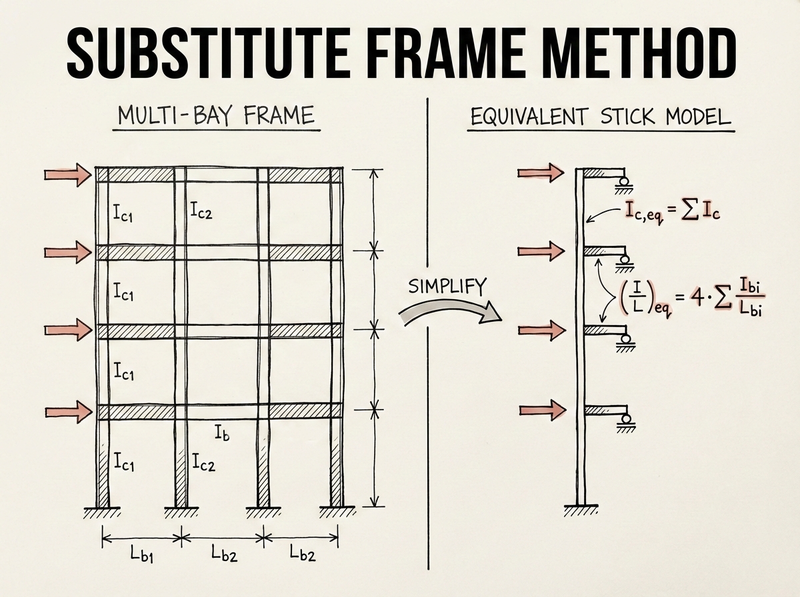
Substitute Frame Method

Substitute Frame Method

The architect has handed you floor plates, and you need to figure out whether a moment frame system will work for seismic resistance. The problem? You don’t have member sizes yet. You don’t know the period. And without the period, you can’t pull loads from the response spectrum. Classic chicken-and-egg.

PBD Toolkit Part 3: Analysis, Modeling & Verification
Design principles Practical applications Industry insights

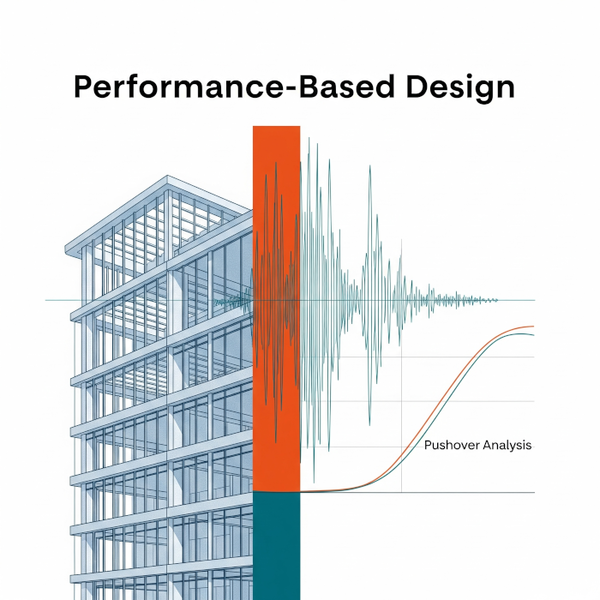
PBD Toolkit Part 3: Analysis, Modeling & Verification

In our first two posts on Performance-Based Design (PBD), we covered the “what and why” – shifting from prescriptive codes to targeting specific building performance – and then we looked at the “who and how” of setting those crucial performance objectives. If you missed them, I’d suggest giving them a read first as we’re about to jump into the deep end of the pool.

An Introduction to Performance Based Design
Design principles Standards Industry insights

An Introduction to Performance Based Design

On complex projects—tall buildings in Vancouver, essential facilities in higher seismic zones, or structures with unusual geometry—the prescriptive NBCC pathway can start to feel limiting. Performance-Based Design, or PBD, is the framework that lets us define how the building should behave and then design backwards from those objectives.

Navigating Serviceability (SLS) in NBC 2020
Standards Design principles Practical applications

Navigating Serviceability (SLS) in NBC 2020

We spend a lot of time ensuring our structures are strong enough (hello, ULS!). But what about how they feel and perform day-to-day? That’s where Serviceability Limit States (SLS) come in. Sagging floors, cracked partitions, or that annoying bounce when someone walks by – these are all SLS concerns. The National Building Code of Canada (NBC) 2020 has brought SLS criteria more formally into the main body of the code (Article 4.1.3.4.), underscoring its importance.

Mastering NBC 2020 Load Combinations
Standards Design principles

Mastering NBC 2020 Load Combinations

Navigating load combinations can sometimes feel like a complex dance. Get one step wrong, and the whole routine can fall apart. The National Building Code of Canada (NBC) 2020, specifically Article 4.1.3.2. and its associated tables, lays out the choreography for ensuring our structures are safe under various loading scenarios. Whether you’re getting to grips with principal and companion loads or double-checking a tricky overturning case, a solid understanding here is non-negotiable.

About Me

Image

Hey there!

I’m Arun Kishore, a Professional Engineer based in Vancouver, BC. I specialize in structural engineering for LNG facilities, civic water infrastructure, and advanced buildings — with a passion for automating the tedious stuff so engineers can focus on what matters.

Know More

Social