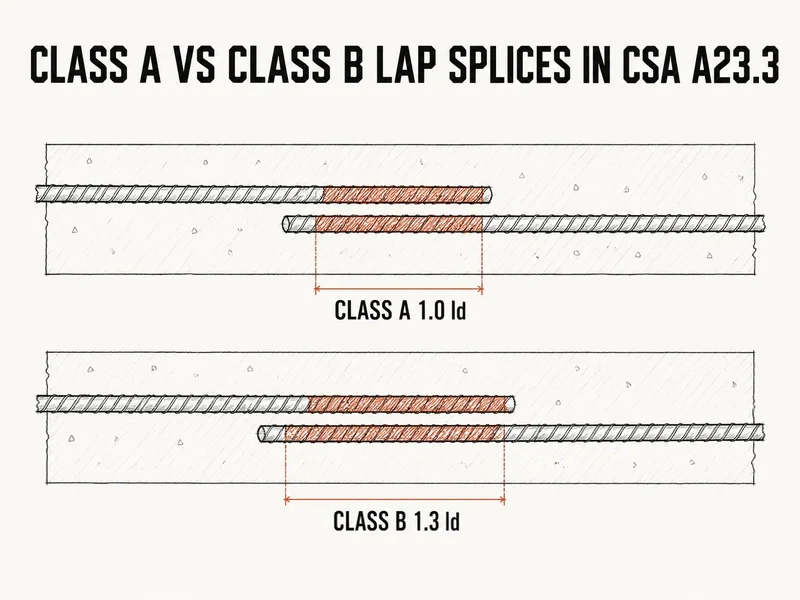
Class A vs Class B Lap Splices in CSA A23.3
CSA A23.3 allows the shorter Class A lap only with twice the steel and under half the bars spliced, so a 50 % stagger still needs a 1.3 ld Class B lap.
Explore practical insights on Canadian structural engineering, from codes (NBCC, CSA) & design procedures to innovative ideas in steel, concrete & wood. Continuous learning for EITs & P.Eng.
CSA A23.3 allows the shorter Class A lap only with twice the steel and under half the bars spliced, so a 50 % stagger still needs a 1.3 ld Class B lap.

The notable wind design changes in NBC 2020 for Canadian engineers: attached canopies, parapets, rooftop solar panels and partial loading.
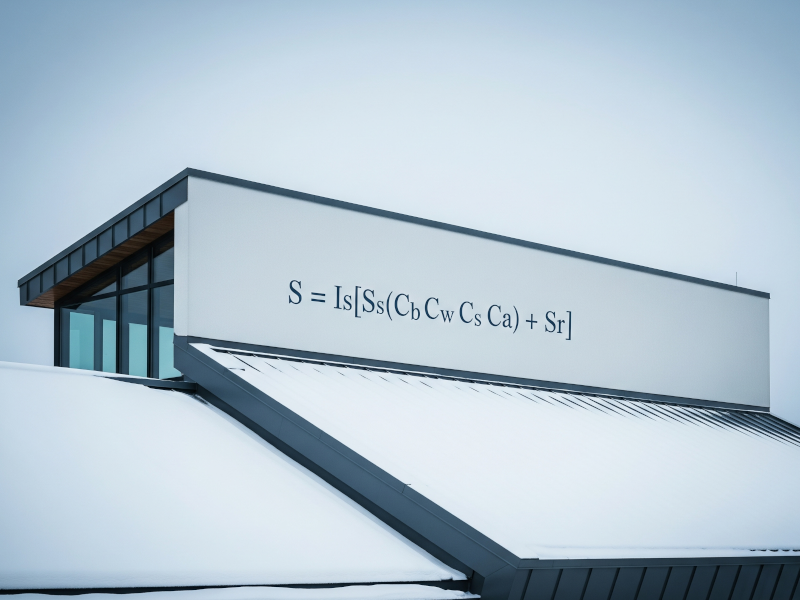
The history and engineering logic behind the NBCC snow load factors Cb, Cw and Cs, and what each one is really accounting for on your roof.
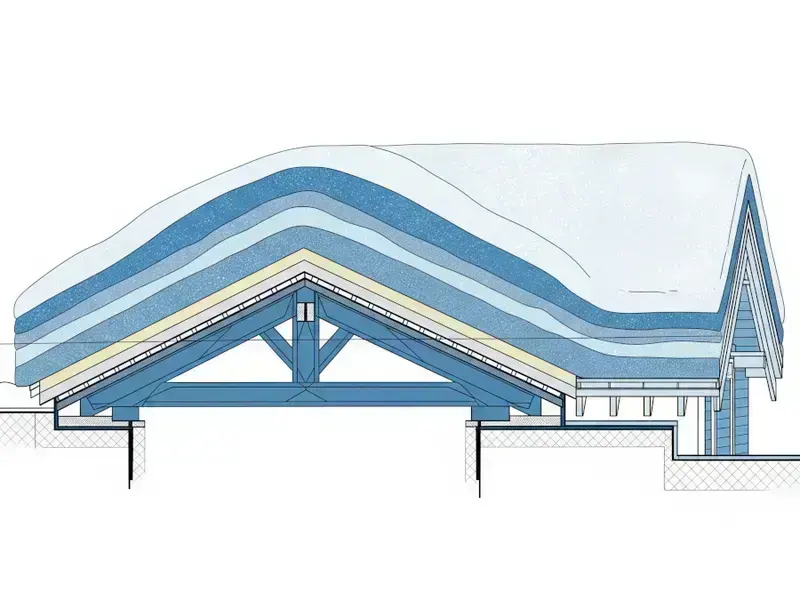
How Ss and Sr differ, why the specific weight of snow changes through the winter, and how Canada's snow climates shape NBCC roof loads.
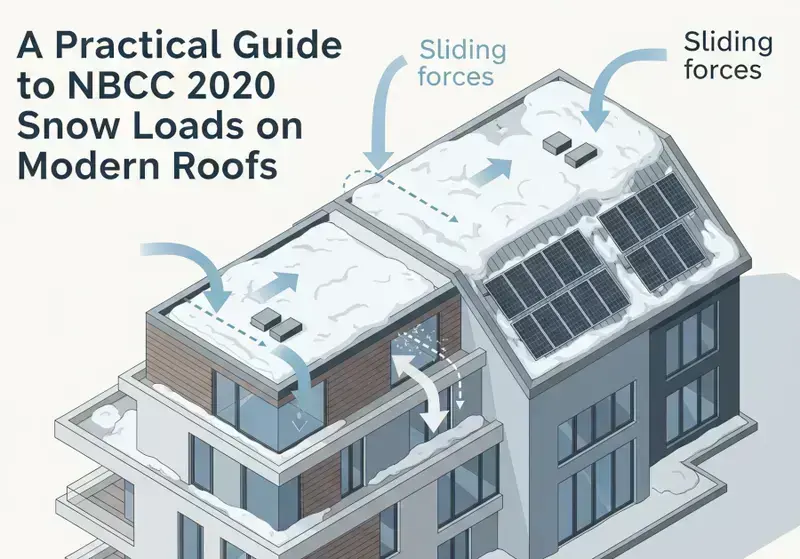
How NBCC 2020 handles sliding snow, solar panel arrays, and the loads on snow retention systems and sunshades on modern roofs.
Five NBCC 2020 commentary live load provisions that are easy to miss: snow and live companion factors, two-way slab reduction limits and repair garages.
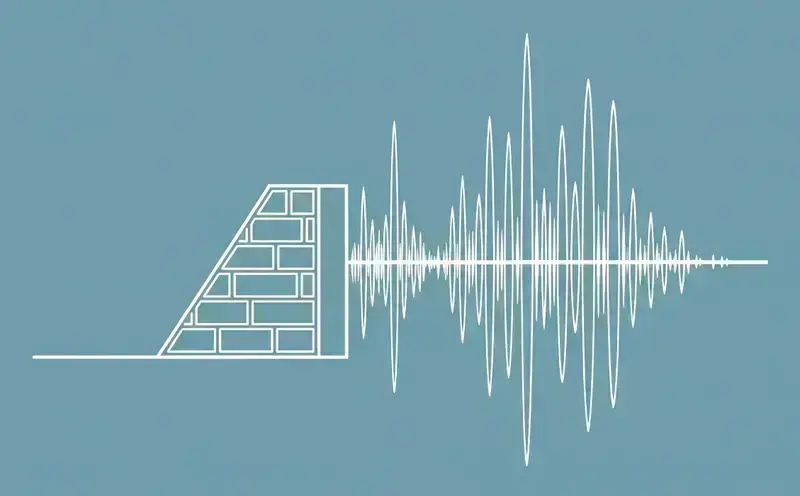
Mononobe-Okabe K_AE formula with a worked 4.0 m wall, the NBC 2020 clauses that call for it, the wall inertia it leaves out, and where the method breaks.