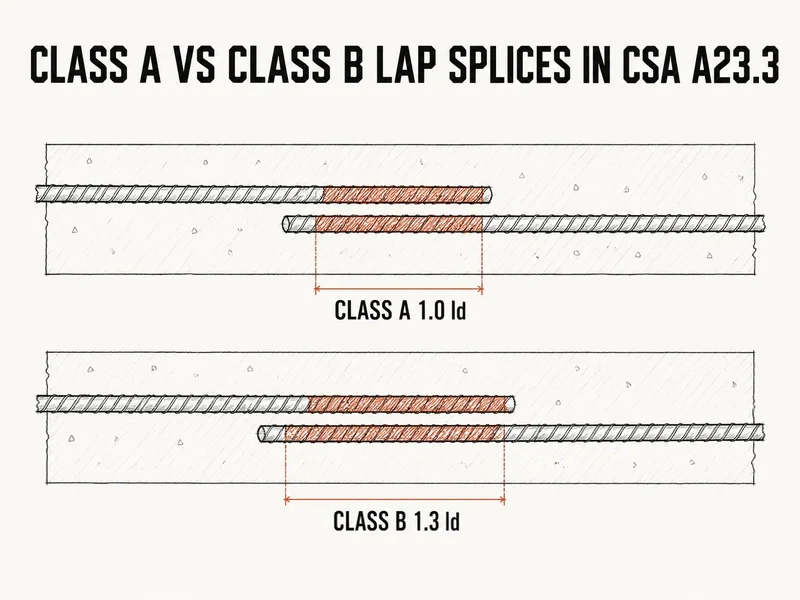
Class A vs Class B Lap Splices in CSA A23.3
CSA A23.3 allows the shorter Class A lap only with twice the steel and under half the bars spliced, so a 50 % stagger still needs a 1.3 ld Class B lap.
Explore practical insights on Canadian structural engineering, from codes (NBCC, CSA) & design procedures to innovative ideas in steel, concrete & wood. Continuous learning for EITs & P.Eng.
CSA A23.3 allows the shorter Class A lap only with twice the steel and under half the bars spliced, so a 50 % stagger still needs a 1.3 ld Class B lap.
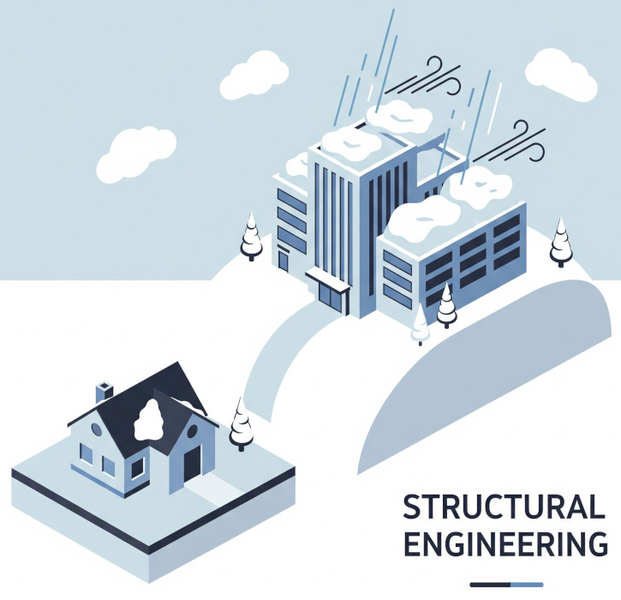
How wind and snow loads are determined under NBCC Part 4 and Part 9, where the two paths differ, and when to switch to a detailed analysis.
NBCC Part 4 limit states design compared with Part 9 prescriptive rules: how each path works and what it means for design and responsibility.
A deep dive into the NBCC 2020 seismic updates, comparing Part 4's evolution with CanadaSHM6 and Part 9's lag, and what it means for your designs.
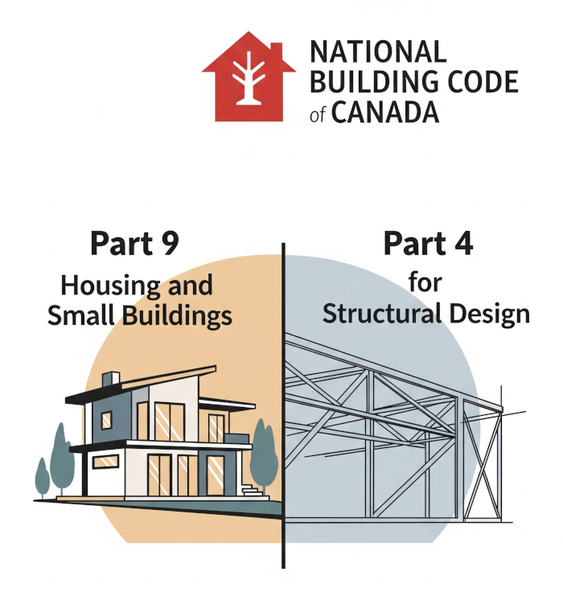
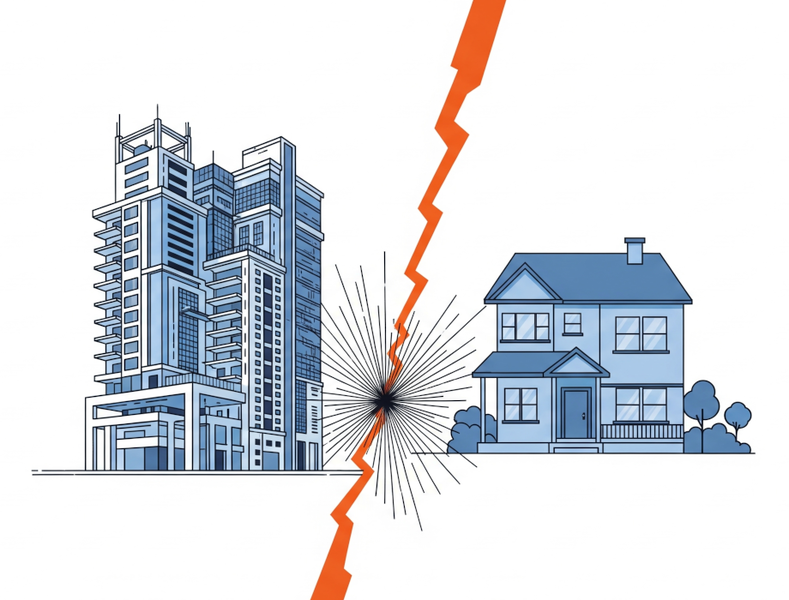
Where NBCC Part 9 stops and Part 4 begins: the scope of each, the triggers that push a building into engineered design, and the grey areas.
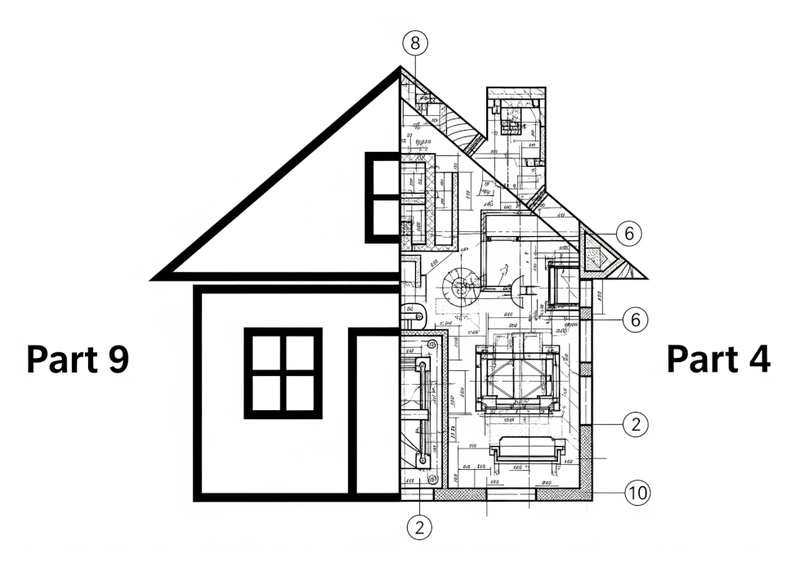
When a Part 9 building needs Part 4 engineering: complexity, exceeded prescriptive limits and site conditions, with examples and triggers.

Where Performance-Based Design fits in the NBCC, CSA S16 and CSA A23.3, the practical hurdles engineers face, and where PBD is heading in Canada.